How Our Voice Agents Work
We provide conversational AI solutions that work smoothly with your existing business systems. Our architecture—built on telephony, AI voice capabilities, knowledge management, API integrations, analytics, and low-code automation—enables businesses to deliver quality customer experiences consistently and for us to deploy them very quickly.

Telephony and Messaging Integration
Our platform features a comprehensive telephony and messaging system supporting voice calls, SMS, and messaging services including the like of WhatsApp and Slack.
This enables businesses to connect with customers through their preferred communication channels.
The integration handles both inbound and outbound communications, facilitating timely engagement and better customer experiences.
AI-Powered Voice Interactions
We integrate conversational AI technology to improve voice-based exchanges. This system interprets spoken language, enabling fluid conversations between users and AI agents.
Using dedicated API connections to low latency voice processing services, it provides prompt responses and coherent user experiences, making interactions more contextual and effective.


Human-Like Speech for Natural Conversations
To enhance the clarity and expressiveness of AI-generated speech, our solution incorporates industry-leading text-to-speech capabilities.
This technology delivers highly natural and human-like voice synthesis,
supporting multiple languages and voice styles to cater to diverse customer
needs.
Whether engaging in casual conversation or delivering complex responses, the AI agent ensures clarity, warmth, and professionalism in every interaction.
Knowledge-Driven Interactions
A key component of our platform a dynamic knowledge base, which aggregates and structures information from various sources, including FAQs, product documentation, websites and customer records. This allows AI agents to retrieve relevant details quickly and accurately when responding to customer inquiries. Additionally, these knowledge bases can be programmed to query dynamic data sources, such as CRM systems or proprietary databases, ensuring that the AI agent delivers real-time, personalized responses.
By leveraging this structured knowledge, businesses can provide their customers with instant, precise answers while ensuring consistency in communication across all interactions.


API-Enabled Integration with Business Systems
Our platform connects with external business systems for real-time data access and management. When receiving a call, the AI agent can access the caller's customer profile, enabling personalized service. Integrations include:
CRM Systems – Access and update customer profiles in systems like Oracle Fusion Cloud or Microsoft Dynamics 365
Order/Inventory Management – Provide updates on order status and product availability
Billing/Payment Platforms – Handle invoice questions and process payments
Scheduling Tools – Manage appointments and deliver reminders
Call Analysis for Continuous Improvement
To ensure ongoing enhancement of AI agent performance, our platform incorporates powerful call analysis tools.
AI-Based Call Evaluation – A native assessment model utilizes a large language model (LLM) as a judge to evaluate conversation effectiveness. This system provides structured feedback on AI-generated responses, helping refine conversation flow and accuracy.
External Call Analysis Tools track interaction patterns, assess customer sentiment, and generate insights for optimization. These tools offer a detailed view of caller journeys, highlighting areas for improvement and identifying opportunities for better engagement.
By continuously monitoring and refining AI interactions, businesses can ensure high-quality, reliable customer service.
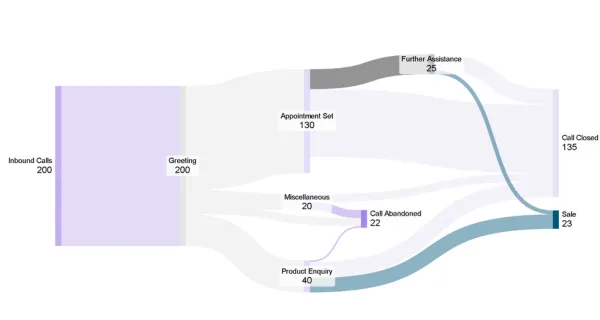

Workflow Automation with Low-Code/No-Code Integration
Our low-code / no-code automation tools connect AI agents with third-party applications, enabling:
CRM Data Synchronization – Syncing customer data between systems like Oracle Fusion Cloud and Microsoft Dynamics
Multi-Channel Marketing – Triggering email follow-ups in Mailchimp or creating customer segments in HubSpot
Support Ticket Management – Generating cases in Zendesk or follow-up tasks in Salesforce Service Cloud
Process Automation – Sending conversation summaries to Slack or creating project tasks in Asana
Read our Blogs and Find Out More

The $32 Billion “No” That Might Just Save the World
By your tech sleuth at scotsphere.ai —the only person still waiting for a startup to say, “Actually, we’re good.”
If someone offered you $32 billion—yes, with a “B”—you’d probably take it. Buy a few islands. Clone your dog. Retire into a life of silk robes and gold-encrusted toast.
But not Ilya Sutskever.
When the co-founder of OpenAI turned down Meta’s buyout offer for his startup, Safe Superintelligence (SSI), it sent shockwaves through Silicon Valley. Because rejecting that much money isn’t just headline bait—it’s a philosophical statement about the future of AI.
And it’s a statement that should make all of us sit up, log off Instagram, and pay attention.
From "Move Fast" to "Move Never (Until It’s Safe)"
Let’s get one thing straight: Ilya Sutskever isn’t some idealistic sophomore with a vision board. He co-built AlexNet. He co-founded OpenAI. He helped birth ChatGPT.
When this guy starts a company and says, “We’re not releasing anything until we’ve solved safe superintelligence,” you don’t roll your eyes. You ask what he knows that you don’t.
That’s the whole point of SSI. Unlike other AI companies tripping over each other to ship features, grow revenue, and raise Series Q, Sutskever and team are playing a completely different game. They’ve sworn off product launches, MVPs, and investor pressure. It’s either solve safety or bust.
It’s AI R&D by monastic vow.
Meta’s Midlife AI Crisis
Now flip the camera to Meta. After SSI declined the offer, Zuckerberg & Co. didn’t shrug and move on. They panicked—like a college kid realising their group project partner just quit the night before the final.
The result?
$100 million signing bonuses for researchers (yes, that’s nine zeroes).
Talks to poach SSI’s CEO and invest in his VC fund (because if you can’t buy the startup, try dating its cousin).
A $14.3 billion stake in Scale AI to help build a competing “superintelligence lab.”
This isn’t just aggressive talent acquisition—it’s corporate existential dread with a chequebook.
As Dr. Maya Feldman, AI governance expert at MIT, puts it: “When companies start throwing billions at research teams that haven’t shipped a product, they’re not investing—they’re scrambling.”
The Surprising Stat That Says It All
Ready for the jaw-dropper?
Meta offered $32 billion for a startup with zero products, zero revenue, and 20 employees.
That’s over $1.5 billion per person—basically the GDP of Belize per coder.
It’s not about buying tech. It’s about buying credibility. And when a company has to spend that much to look like a player in the AI race, it tells you they’re not leading—they’re lagging.
Philosophical Deathmatch: Safety vs. Speed
This story isn’t really about money. It’s about values. And the divide couldn’t be starker.
On one side: the traditional tech playbook. Move fast. Break things. Apologise later. Iterate faster.
On the other: SSI’s approach. Move cautiously. Break nothing. Prioritise safety over shipping.
Which is right?
If Meta wins, we might get powerful AI sooner—but risk building systems optimized for ad clicks, shareholder value, and dopamine hits.
If SSI wins, we might wait longer—but have a chance at AI that aligns with human flourishing rather than quarterly earnings.
As Prof. Elena Wirth, a futurist at Oxford’s Future of Humanity Institute, warns: “The biggest risk isn’t AI being evil—it’s AI being misaligned with what humans really want. And rushing increases that risk exponentially.”
Why This Matters (Even If You’re Just Here for Memes)
We’re in the middle of an AI arms race where the rules haven’t been written—and might not be until it’s too late.
When one of the world’s most respected AI minds says, “No thanks, I’d rather stay independent and keep this small,” it’s a powerful signal. Not just about how we build AI, but why.
Because the stakes aren’t just digital assistants or better cat memes. We’re talking about technologies that could shape the future of jobs, governments, relationships—even what it means to be human.
And right now, those choices are being made by a very small club with very big wallets.
What Can You Do?
You don’t need to build superintelligence. But you do need to pay attention.
Ask where your AI tools come from. Understand their incentives. Be vocal about the kind of future you want to see.
And if you're running a business, especially one that can't afford to fall behind, there's something else you can do:
Talk to scotsphere AI.
We build smart, secure voice agents that show up to work on time, handle your real problems, and integrate seamlessly into your business without feeding your data to the cloud gods.
It’s AI built with principles—and built to work.
Ready to talk to a future that actually listens?
Visit scotsphere.ai today and meet the team that’s keeping AI ethical, practical, and genuinely useful.
Because when the billionaires are busy playing AI chess with the future, you still need someone to answer your phones.










Navigation
Contact Us
Registered with the Information Commissioners Office: ZC021807
Check our registration
VAT Registration: 941342835
Company Registration: SC305350
Cyber Essentials Certified:
© 2025 scotsphere.ai All Rights Reserved